California Baton Permit: Who Needs It and How to Get It
By Security Training Finder Editorial Team
Requirements last verified
A California baton permit is a credential from the Bureau of Security and Investigative Services (BSIS). Registered security guards and certain private patrol operator (PPO) licensees need it before they can carry or use a baton on duty. To get one, you complete the BSIS baton training course at a Bureau-certified Training Facility Baton (TFB) school, pass the written exam, and apply directly to BSIS. As of October 1, 2025, the application fee is $66. Since January 1, 2024, baton permits expire every two years and must be renewed, and renewal requires retaking the training (BSIS Baton Permit Fact Sheet; BSIS fee schedule).
Below is what the law requires and where each rule comes from. Check current BSIS forms before you enroll, because requirements change.
Who needs a baton permit
California law prohibits licensees, qualified managers, and registered security guards from carrying or using a baton on duty unless they hold a valid baton permit (Business and Professions Code §7583.37, reproduced in the BSIS Firearms Training Manual).
According to the Baton Permit Fact Sheet, these people are eligible:
- Registered security guards (guard card holders)
- The sole owner of a sole-ownership PPO
- A partner of a partnership PPO licensee
- A qualified manager of a licensee
You can apply while your guard registration is still pending. The application allows you to write "applying" in place of a license number (Baton Permit Initial Application). A baton permit is valid only while it is associated with a current, valid qualifying license (BSIS notice).
Several limits apply:
- Duties of the associated license only. The permit lets you carry a baton only while performing the duties of the license associated with it (Initial Application).
- In uniform. The application states that guards, PPO owners or partners, and qualified managers may wear or use a baton on duty only when in uniform.
- Employer type. A registered security guard may carry a firearm or baton only while employed by a licensed PPO or by the state or a political subdivision (BPC §7583.3, reproduced in the Firearms Training Manual).
If you don't have a guard card yet, see how to get a guard card in California.
What changed in 2024 (AB 2515)
Assembly Bill 2515 (Chapter 287, Statutes of 2022) changed how BSIS issues baton permits. The changes took effect January 1, 2024 (BSIS New Law Alert):
- Applicants now apply and pay directly to BSIS. Before 2024, training facilities issued the permits.
- Baton permits now expire and must be renewed every two years.
- Both initial and renewal applicants must complete training at a licensed Baton Training Facility.
- A baton permit can now be associated with a PPO sole owner, partner, or qualified manager.
- Active-duty peace officers get specified training exemptions.
Older BSIS materials, including the 2006 Baton Training Manual student text, say that baton permits do not expire. That statement is out of date.
The baton training course
Where it's taught
You must take the course at a Bureau-approved Baton Training Facility from a Bureau-approved Baton Training Instructor, and you must pass the written exam (Fact Sheet). The instructor attests under penalty of perjury that you completed the course. The instructor records the facility's TFB certificate number, their own instructor (TIB) license number, the date of classroom instruction, and your written exam score on the certification page of your application (Initial Application).
The BSIS public licensee file we analyzed lists 164 Training Facility Baton (TFB) license records among 898 deduplicated training-licensed organizations. Not every license holder offers classes to the public, because some train only their own staff. Check any facility and instructor with BSIS's Verify a License tool before you pay.
- Find baton training schools in California
- Browse all California training schools
- How we verify security training schools
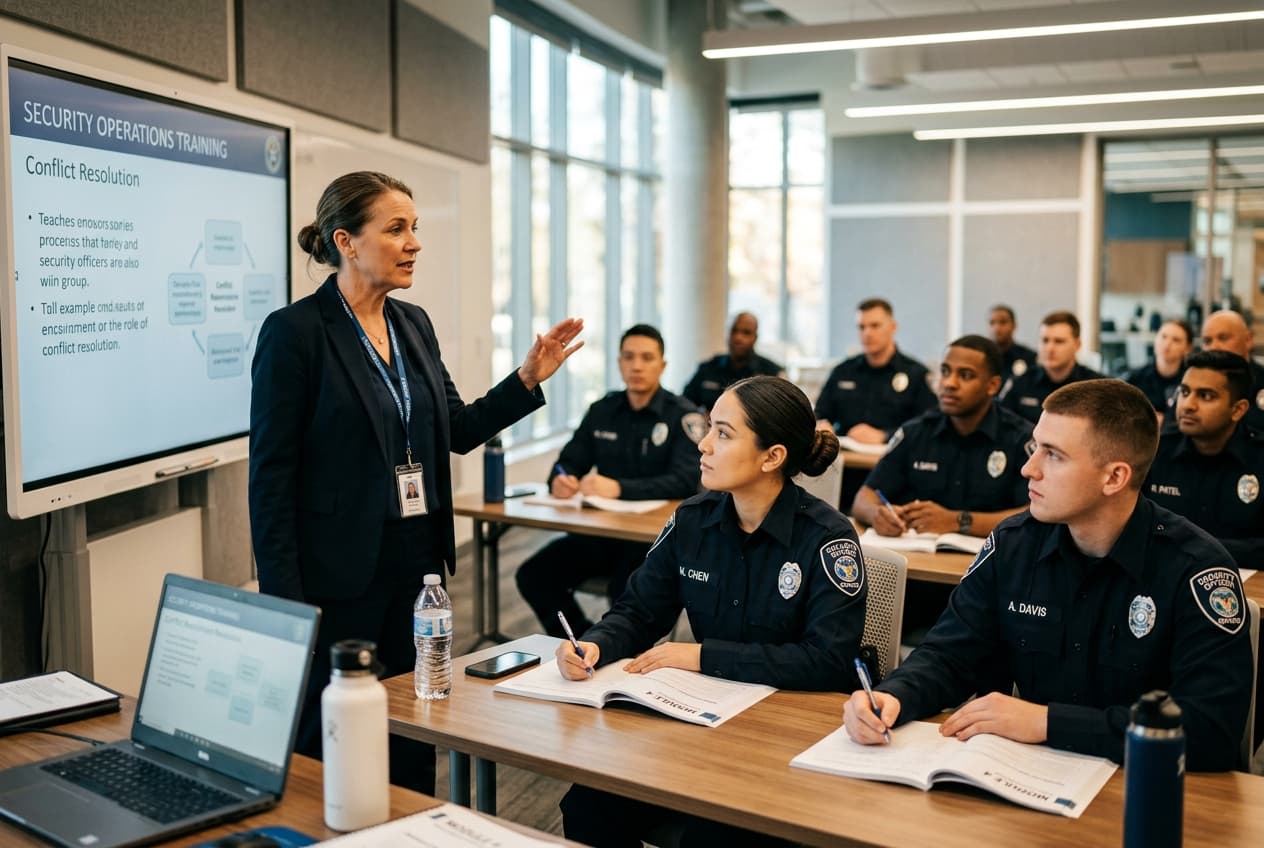
Length: at least 8 hours
The BSIS Baton Training Manual (Administrative Procedures, January 2020) says students "MUST complete a minimum of eight (8) hours of instruction," citing BPC §7585.13. It also warns that cutting the required hours may violate the Penal Code or the Business and Professions Code (Baton Training Manual – Administrative Procedures). Schools set their own schedules, and BSIS lets facilities choose how to organize and deliver the instruction, provided all of the manual's material is covered.
What the course covers
Under BPC §7585.9, the course must follow the format in BSIS's Baton Training Manual and include at least the following (Baton Training Manual – Student Text):
- Moral and legal aspects of baton use: guard and employer responsibilities, and criminal, civil, and vicarious liability
- Use of force: reasonable force, deadly force, defense of others and property, and de-escalation
- Baton familiarization and uses: straight, straight expandable, side-handle, and side-handle expandable batons
- First aid for baton injuries
- Fundamentals of baton handling: stances and grips, target areas (and areas to avoid), defensive techniques, control techniques, and arrest-and-control techniques
- Examination
BSIS issues one generic baton permit. It does not issue separate permits for each baton type (Student Text).
The written exam
The Administrative Procedures manual describes a closed-book, 24-question exam given and scored by a certified baton instructor. To pass, you need at least 20 of 24 points and must correctly identify the vital areas of the body that should be avoided because striking them could cause serious or fatal injury. The instructor records your score on the application's certification page.
How to apply
- Complete the baton course and pass the exam at a licensed TFB school.
- Have your instructor fill out the "Certification of Baton Qualification Training" page of the Baton Permit Initial Application.
- Submit the application and fee to BSIS. You can apply online through BreEZe, where you upload the completed application as an attachment, or by mail to BSIS, P.O. Box 989002, West Sacramento, CA 95798-9002. BSIS recommends BreEZe because it skips the cashiering office and can cut processing time by up to two weeks (Fact Sheet).
- Wait for processing. The application says to allow 60 days before contacting BSIS. The Fact Sheet says 6 to 8 weeks from the date your payment is cashiered.
Fees
According to the BSIS fee schedule, for applications submitted on or after October 1, 2025:
| Item | BSIS fee |
|---|---|
| Baton permit, initial application | $66 |
| Baton permit, renewal | $44 |
| Replacement permit card | $25 |
Course tuition is separate and set by each school. For the full cost of getting licensed, see how much a guard card costs.
Renewal
A baton permit expires two years from the date it is issued and cannot be renewed after it expires. If it lapses, you must apply for a new permit (Fact Sheet). To renew, you must:
- Retake the baton training course (BPC §7585.9) within the six months before the month your permit expires
- Submit the Baton Permit Renewal Application with the instructor's certification page and the $44 fee
- File at least 60 days before expiration. BSIS returns applications received more than 120 days early.
BSIS mails a renewal reminder about 120 days before expiration. The reminder is not an application. Your baton permit also depends on your guard registration or other qualifying license staying current, so keep that renewed as well.
Frequently asked questions
How long is baton training in California?
At least 8 hours, according to the BSIS Baton Training Manual's administrative procedures (source).
Does a California baton permit expire?
Yes. Permits issued on or after January 1, 2024 expire two years after issuance (BSIS New Law Alert).
Can I get a baton permit before my guard card is issued?
You can apply while your guard registration application is pending. The baton permit application accepts "applying" in place of a license number. You can't carry a baton on duty until you hold both a valid registration and the permit (Initial Application).
Can an in-house (proprietary) guard carry a baton?
Under BPC §7583.3, a registered security guard may carry a firearm or baton only while employed by a licensed PPO or by the state or a political subdivision. If your situation is unusual, confirm with BSIS before you carry.
Are peace officers exempt?
Active-duty peace officers and federal qualified law enforcement officers may be exempt from the BSIS course if they provide proof of their status and of completed baton training (BPC §7584.3(b)(2), cited in the Initial Application).
Do I also need a firearm permit?
Only if you will carry a firearm. That permit has separate training, a separate assessment, and its own requalification schedule. See the California exposed firearm permit guide. For requirements in other states, see security guard license requirements by state.
Sources
- BSIS, Baton Permit Fact Sheet (May 2025)
- BSIS, Baton Permit Initial Application (October 2025)
- BSIS, Baton Permit Renewal Application
- BSIS, New Law Alert: Baton Permits (AB 2515)
- BSIS, Baton permit association notice
- BSIS, Baton Training Manual – Administrative Procedures (January 2020)
- BSIS, Baton Training Manual – Student Text (March 2006)
- BSIS, Firearms Training Manual (July 2023), which reproduces BPC §§7583.3 and 7583.37
- BSIS, Licensing Fees (effective October 1, 2025)
- BSIS, Verify a License
- California Business and Professions Code, Division 3, Chapter 11.5 (California Legislative Information)
- Security Training Finder analysis of the BSIS public licensee file (October 2026)
Licensing rules change. Confirm current requirements with your state's licensing agency before enrolling. How we verify schools